By Abdirahman Ibrahim | Consortium Communications Coordinator | BORESHA-NABAD

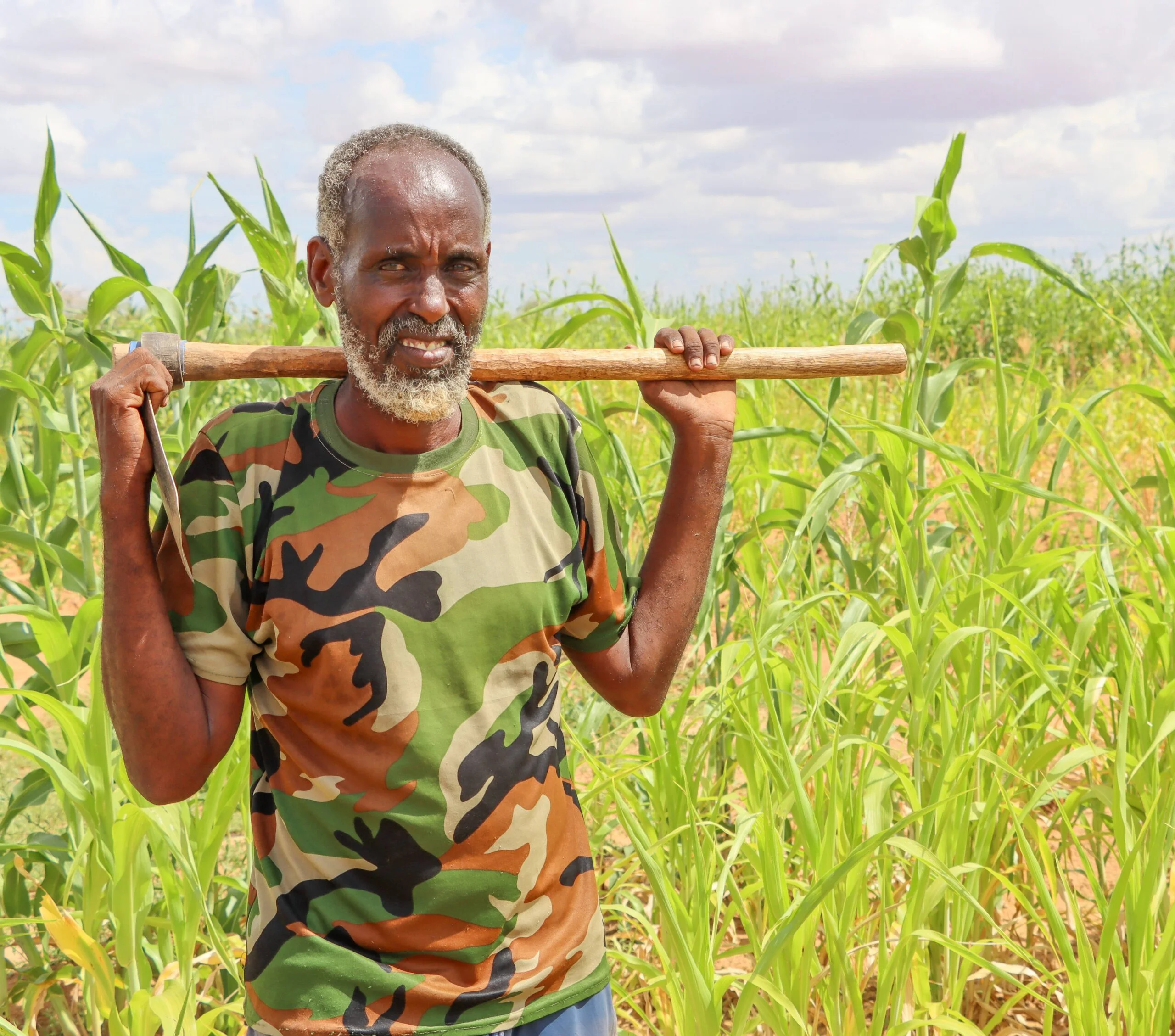
In Una Village, Dollow, Somalia, Saadia Duale, an environmental champion, is on a mission to transform Dollow District. As the leader of a BORESHA-NABAD-supported women’s tree nursery group, Saadia and 59 other women are driving a grassroots movement to restore degraded landscapes, respond to climate shocks, and unlock inclusive economic opportunities in Somalia’s borderlands.

Saadia’s group is offering a locally driven and sustainable alternative in a district facing severe deforestation, recurring droughts, and the loss of indigenous trees to widespread charcoal burning.

“Tree planting has become our inspiration for a better life. Our members are now able to feed their families and afford their daily needs through seedling sales. Much as the trees are beneficial to the environment, they’re also a lifesaver and a game-changer,” she says.

Rewiring Local Market Incentives through Green Livelihoods

Dollow’s environmental degradation has deep roots. With high unemployment and limited income-generating options, many men in the district have long depended on charcoal burning to support their families. Yet this coping mechanism has accelerated landscape degradation, flooding, and ecosystem collapse. Meanwhile, most women remain economically excluded, with few viable pathways to income generation.

This began to shift when BORESHA-NABAD, funded by the European Union and implemented by RACIDA Somalia, partnered with Saadia’s group. The programme supported the group with technical training in nursery management, seedling marketing, business skills, and climate-resilient agriculture. Investments also included four greenhouses and water tanks to facilitate year-round tree cultivation.

The group has cultivated and planted more than 7,000 tree seedlings, including lemon, papaya, moringa, and neem. Now retailing at $3–4 each, these trees generate consistent revenue and build a viable local market for sustainable forestry products.

Women as Catalysts in Systemic Environmental Change

“Since BORESHA-NABAD trained me, I’ve become a trainer of trainers. Women who were once idle at home are now active contributors to our local economy and environment. I am training more village women to nurture trees and earn income,” Saadia shares.

These women, many of whom are widows, single mothers, or from marginalised backgrounds, are now redefining gender roles and influencing household decision-making. The initiative is also contributing to a mindset shift among men.

“Most of our group members’ husbands were charcoal burners. But now they’ve become seedling sellers. With this income, our men have transformed into allies in environmental restoration. More trees mean more rain,” Saadia explains.

Enabling Market Systems for Scalable Environmental Impact

The nursery farms established with BORESHA-NABAD’s support have become local nodes for environmental restoration and women’s economic empowerment. Their success is not just in the number of trees planted but in the systems-level change they are sparking, improved household income, reduced dependence on extractive livelihoods, and increased community ownership of solutions.

“With every tree we plant, we’re not just protecting the environment, we’re transforming lives,” says Saadia. “Today, many people in Dollow face drought, deforestation, and joblessness. But through this initiative, we’re creating new livelihoods and showing that change is possible.”

Saadia and her group aspire to double their efforts in the months ahead and plant thousands more trees, perhaps even a million. As a group leader, she is determined to become a national model for climate adaptation and women-led resilience.

“Women are nurturers, and now, we commit to double our efforts in nurturing the land,” Saadia concludes.

Read More Stories Below

From Survival to Strategy: How Dollo-Ado Women Are Building Financial Resilience through VSLAs

By Abdirahman Ibrahim|Consortium Communications Coordinator|BORESHA-NABAD

A quiet transformation is underway at the heart of the Mandera Triangle, Dollo-Ado, a town shaped by migration, informal trade, and resilience. 25 women from Al-Qamar Village Savings and Loan Association (VSLA) are shifting from informal survival strategies to engaging productively in the local market economy.

For years, many women in Dollo-Ado operated on the economic margins, selling fruit, borrowing informally, and navigating the daily pressures of household survival. Lacking access to formal financial services, they relied heavily on traditional ayuuto systems, rotating savings that provided temporary relief but lacked long-term impact. Financial literacy, access to credit, and asset building remained elusive.

Enabling Economic Participation through Structured Finance

Sumeya Maalim Jaafar, a fruit vendor and mother of four, recalls how her daily income rarely translated into financial stability.


“I used to be in an ayuuto group. But it wasn’t a real saving. The money came and went,” she says.


That changed when she joined Al-Qamar VSLA through the BORESHA-NABAD programme, funded by the European Union and implemented by the Danish Refugee Council (DRC), Ethiopia. Designed to strengthen resilience and facilitate local market participation, the initiative connected women to a structured saving mechanism, an entry point into more formal economic activity.

Through targeted training on financial planning, group governance, and income diversification, Sumeya and her peers began saving 250 birr weekly. It may seem modest, but collectively, they’ve mobilised over 166,000 birr, capital that is now circulating locally, supporting small enterprises, and reinforcing community-level financial flows.

“I borrow to restock my fruit stall and repay it without pressure. It’s not a handout. It’s sustainable. It’s ours,” Sumeya explains.

Governance, Trust, and Systemic Change

The VSLA’s model emphasises transparency and accountability as foundational principles for building trust in financial systems. Their metal savings box, secured by three locks and three custodians, symbolises shared responsibility. With a constitution, member passbooks, and formal registration facilitated by the local cooperative office, Al-Qamar is now integrated into the broader financial support structure.

“We didn’t think women could manage money collectively. But structured training helped us create systems. Now, we have bylaws, records, and oversight. We’re part of something bigger.” Chairlady Arfon Osman Abdille notes

The group has introduced three savings components: regular contributions, an emergency fund, and a long-term investment fund. This segmentation reflects a shift from reactive to proactive financial planning, which is a key element in enabling inclusive, sustainable market engagement.

Expanding Financial Access and Market Linkages

The initiative has also addressed systemic barriers for women, especially those from marginalised clans and vulnerable backgrounds. Lul Mohamed Gelle highlights how the group now provides a safer, low-risk alternative to predatory borrowing.

“We operate like a women-run bank, not with interest, but with purpose.”

Farhyia Abdirahman Galla, a disabled vegetable seller and single mother, underscores the inclusive nature of the VSLA.

“For the first time, I feel included. My daughter is learning that saving is about opportunity, not just survival.”

Crucially, the group is now positioned for vertical linkages. With guidance from cooperative officers, Al-Qamar is preparing to engage with microfinance institutions (MFIs) and agribusiness actors. Their long-term goals,  leasing land for vegetable farming and launching a clothing enterprise, signal a pivot from micro-activity to microenterprise development.

Building Resilience through Systems Thinking

Al-Qamar’s story exemplifies how targeted, inclusive market systems interventions can catalyse change. By embedding savings culture, building local capacity, and facilitating formal linkages, these women are improving household resilience and becoming active participants in Dollo-Ado’s local economy.

“We used to think women couldn’t lead or build something bigger,” Arfon says. “Now we know better. We are shaping our future with systems, not just hope.”

Read More Stories

The BORESHA-NABAD consortium, funded by the European Union, is intensifying efforts to build resilience within Kenya’s Mandera County through gender-responsive Disaster Risk Reduction (DRR) planning. This initiative, targeting strategic hot spot centres spanning Mandera East, Mandera North, Lafey, and Banisa sub-counties, champions locally driven, inclusive approaches to addressing the county’s complex environmental and socio-political challenges.

Mandera County, part of the fragile borderland area of the Mandera Triangle where Kenya, Somalia, and Ethiopia converge, faces unique challenges, including cyclic droughts, inter-communal conflicts, and high competition for diminishing natural resources weakened by climate and human-induced stresses that have made resilience crucial for its communities.

To address these issues, the BORESHA-NABAD project has initiated interventions in borderland communities to foster the local population’s resilience and conflict mitigation strategies. Through RACIDA, the consortium recently launched a training programme targeting DRR committees and community members across six sub-counties, engaging DRR committees and community members in proactive disaster management strategies.

“This training has taught us to look at risks differently, especially how they impact women and children. We now see the importance of including everyone in our plans so that no one is left behind in times of crisis,” shares Mzee Koriow.

The consortium adopted a practical, hands-on approach and engaged participants in community hazard assessments, identifying vulnerabilities and understanding how various social groups experience these risks differently. This comprehensive approach ensured that DRR plans were technically sound, culturally relevant, and community-driven. Gender-inclusive DRR Committees were established in all seven target areas, with at least 40% female participation, ensuring that women’s voices informed the DRR process from the start.

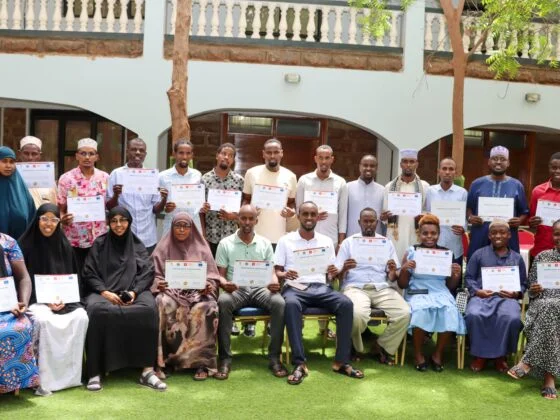
The training sessions across seven strategic centres reached 123 community members, including local leaders, women, youth, and representatives of vulnerable groups, such as people with disabilities. These sessions provided DRR committee members with vital knowledge on disaster risks, climate impacts, and gender-sensitive planning, covering foundational knowledge of natural and human-induced hazards and the distinct vulnerabilities they create.

Women traditionally excluded from DRR decision-making are now integral to the process, bringing their perspectives to the table and enriching policy development with their lived experiences.

“I am happy that we are now at the forefront of this process. Women are often the most affected in any disaster, whether conflict or natural calamities like flooding, yet we were sidelined as men made decisions. Now, it’s a win-win as we can actively shape the process,” says Deka Abdi of Bur Abor.

Through this initiative, a systematic result chain was utilised to link training materials, resources, and human input, including facilitators and community leaders, to concrete outputs, such as the formation of DRR committees in high-risk areas, enhanced knowledge and skills, and strengthened local systems geared towards sustainability. Inclusivity extended to participants with disabilities, ensuring that every voice counted. Additionally, targeting centres across borders allowed participants to share experiences and unite around cross-border challenges, which is essential to addressing the borderlands’ complex dynamics.

“We are beginning to understand that the peace and safety of our communities are interconnected. Having women on these committees ensures that everyone’s voice is heard during decision-making,” adds Mohamed Suleiman, Elder, Fiqow.

This gender-responsive DRR planning is a crucial milestone toward BORESHA NABAD’s intervention to foster resilient communities equipped to navigate environmental and socio-political obstacles. The project sets the groundwork for sustainable peace and stability in Mandera and neighbouring areas, with continued support to drive these plans into lasting and systemic change by empowering marginalised voices.  

Peterson Mucheke/BORESHA Project

Consecutive poor or failed harvests and loss of agricultural income for farmers and widespread death of livestock among pastoralists is contributing to worsening food security and nutrition in Somalia. Poor and vulnerable communities are being pushed to the brink of starvation. In response, DRC Somalia collaborated with Village Development Committees and local authorities to identify and rehabilitate communal productive assets to support drought resilience in BORESHA project locations. Additionally, Livestock common interest groups (LCIGs) were trained and provided with fuel and a variety of seeds for fodder and human consumption, with the aim of enhancing community resilience and capacity to produce fodder and cash crops and link them to commercial companies.

Khalif Mohamed Sarey, aged 69, is living with his extended family in Una Village of Dollow district, Gedo region. He owns a farm that had not been cultivated for 3 rainy seasons due to the prolonged drought. He almost gave up farming as the farm was overgrown and he did not have the financial capacity to purchase seeds and fuel to make the farm productive, owing to high prices and scarcity on the market.

Khalif was among the agro-pastoral beneficiaries that DRC targeted to support with material and farm infrastructure rehabilitation to increase their production capacity. DRC visited Khalif in January 2023 and met him on his farm, where he welcomed the team with a smiling face.  He happily gave thanks and appreciation: ‘‘I thank DRC for their support. I have just harvested Sudan grass once more and still I have around 2-3 orders from Belet Hawa. This was an opportunity for me to restore my livelihood and cope during the extreme stress of the drought. I now have enough sorghum and maize for my consumption as well as for selling to others in the villages for their living”.

Khalif is now getting enough income from his farm harvests to afford to support his family. He is also able to help the dependents of his older brother who is blind and living in Una Village. “I used the Cash I received from harvest to pay off debts, cover educational and medical expenses, purchase groceries and support my elder brother’s family.” Khalif is happy and motivated to continue harvesting to provide food for his loved ones and income to cover their medical and education expenses, as well as money to maintain the health of his animals: “I am also spending income from the farm to support the treatment of my livestock and provision of pasture”, added Khalif

Peterson Mucheke/BORESHA project

The borderland areas covering Gedo region in Somalia, Mandera County in Kenya and Dollo Ado woreda in Ethiopia collectively form part of the Mandera Triangle. The Populations of this area are predominantly pastoralists and riverine farming Somali communities. Their main sources of livelihood are located in shared transboundary areas that include natural resources such as grazing land, surface water resources such as the Dawa River and groundwater resources including the transboundary Dawa-Jubba and Jubba-Shebelle aquifers.

The productivity of these life-sustaining cross border natural resources has been dwindling due to successive climate change related droughts and the impact of the influx of IDPs and refugees to the area.  This has increased the vulnerability of the population to droughts and other forms of disaster: chronic food shortages, severe hunger, lack of household income, water scarcity, displacements and reduced livelihood opportunities are the consequences. Conflicts over scarce resources have also increased, contributing to forced displacement and higher rates of violence against women, children and marginalized groups. Currently, the region is facing the worst drought in living memory after five successive failed rainy seasons. It has ravaged communities’ livelihoods. Households have has to go without food and water.  A senior clan elder Muhumed Deket Elmi says, ‘The drought itself is catastrophic. And so is the conflict that it induces. The drought is thus a single dangerous enemy that kills us twice.”

The BORESHA project facilitated natural resource planning, sharing and management agreements between cross-border communities. The project supported formation and capacity building of community rangeland councils and village-level natural resources management (NRM) committees to implement priority actions and enforce community agreements.

Photo:Restoring productivity of degraded rangelands through collective action under BORESHA

The approach proved successful in reducing community vulnerability to recurring droughts, improved household access to livelihood opportunities and reduced the frequency of natural resource conflicts.

Dolo Ado Woreda Pasture Council Leader Muhumed Deket Elmi describes the initial steps and negotiation processes:We established a 5 member rangeland council including 3 members from 7 kebeles of Dollo Ado and 2 from Dollo Bay in Ethiopia in 2019. Communities in Somalia and Kenya also established their own rangeland councils. The idea for a cross-border agreement first came from the range councils of the three countries. That led to further negotiation processes and formulation of an agreement based on customary norms and practices, which was drafted in September 2021 and signed by council members and government officials the following month.

Muhumed explains the benefits of the cross-border natural resource sharing agreement. “Conflicts arises whenever pastoralists from our side [Ethiopia] or Kenya or Somalia cross borders. It was difficult to prevent conflicts because we didn’t have a cross-border agreement or conflict monitoring system at that time. We tried to end conflicts after they already happened which was not an effective approach. CARE guided us in developing resource sharing agreements and by-laws that enabled us to reduce the frequency of conflicts, enhanced safe cross -border movement and improved management of shared natural resources. We also increased our yields and storage of pasture for our livestock, practiced climate-smart water harvesting and conservation, and rehabilitated severely degraded communal grazing fields. Thereafter, our wellbeing improved significantly.”

Norto Garane, a 58-year old mother, is a resident of Barabarai Village in Dollow district, Somalia. She is a member of the community Disaster Risk Reduction Committee. She lost her husband years ago, which left her alone with the the responsibility of taking care of her large family of 14. For the longest time, Norto’s main source of income was livestock keeping but due to climate change she has diversified and incorporated crop farming into her livelihood activities.

Photo1: Norto standing at the irrigation source point.

Photo2: Onion and squash being cultivated at her plot

After the prolonged drought and dry spell that Somalia has suffered, with five consecutive seasons of rainfall failure, the burden of keeping her livestock alive has taken a heavy toll. Norto had 25 cows, but because of the drought, she now has only 6 left. “As pasture and grass became scarce and then non-existent, to keep our animals alive, we were forced to buy the feed from the market, which was very costly,” Norto says.

She always had dreams of expanding her farm in order to make it more profitable, but those dreams were dashed given the current drought, which left Norto and her family vulnerable. This is how she came to be selected as one of the participants of World Vision’s irrigation farming support under the BORESHA project. Farmers were assisted with the installation of solar panels and tapping of water from the nearby river to support them undertake irrigation farming. This support was intended to help increase their crop’s productivity and reduce the need for costly diesel fuel to power generators, thus also benefiting the ennvironment.

Some few months after the installation of the solar powered water pump, Norto doubled the area under cultivation from less than half hectare to one hectare, where she now grows a variety of crops, including coriander, tomato, spinach, maize, soya beans, onions, papaya, and bananas. Norto says that her income has gone up and that the quality of produce harvested has improved.

“Two months ago, I harvested tomatoes from this plot, and I earned US$800 from 67 plastic drums each worth US$12” she says.

The BORESHA project targets female headed households as a priority. Besides boosting their income, it has helped improve food production and nutrition by increasing the amount of healthy food for home consumption. Now for most of the year, beneficiary farmers have vegetables and fruits under cultivation, now greatly more abundant thanks to the water sourced from the river.

“I would say life has improved significantly for me and my family, thanks to the support of these solar panels. I feel more fulfilled and encouraged even as I hope to expand the farm in the future so that I can keep increasing our yields.”

Abdikadir Abdul Salam/BORESHA Project

Residents of Dollo Ado and Dollo Bay in Ethiopia have every reason to smile because they can access safe and clean water at their doorstep through the effort of equipping and solarization of the borehole. The residents have been facing shortages and lack of clean water for many years: the only source of water they had was the river which is 10 kilometres away. Access to safe water being their biggest burden, it leads to displacement, low school enrolment, conflict over water resources and poor livestock body condition among other serious problems. During the dry season, the water level reduces and communities end up fighting over the scarce resource.

Traditionally in the project area women and girls play a key role in fetching water, doing house chores, and walking long distances to collect firewood. These tasks have exposed them to gender-based violence, and health risks, leaving them with long-term effects that are hard to heal or forget. Women and girls in the project areas were exposed to risks daily when they walked to the river to collect water for their household needs and their livestock. Young girls and women were sometimes abused and assaulted on their way to the river or back, the water was also not clean for human consumption and this posed more risk of getting transmissible diseases such as cholera, diarrhoea, dysentery, hepatitis A, typhoid and polio. Children below 5 years, lactating mothers and the elderly were the most affected by waterborne diseases because of their higher vulnerability.

With funding from EUTF implemented by CARE, BORESHA is changing the dire water crisis by constructing /rehabilitating water points and installing water solar panels in several settlement areas of Dollo Ado and Dollo Bay. A total of 20 systems installed by CARE are up and running in the two district capitals and other towns or villages such as Suftu, Rama, Kurele, and Fiko. The solar-powered water systems are making water more available and accessible to all in these areas. Connections were made to enable house-to-house water supply.


Kedija Dhubeane, a 30-year-old widowed mother of 7 and her family’s breadwinner, lives in Berdale community, Dollo Town. Now she has enough time to operate her small business of selling Khat (a stimulant leaf) in town, taking care of her children and sending them to school on time and regularly. Previously this was a big challenge for her since she had to send her kids to the river to fetch water before school or after school.

“I’m glad my children are not wasting a lot of time fetching water: instead they have saved time to engage with their studies, go to school on time, play with their friends, and engaged in other tasks. I have also focused on my business in expanding it by selling milk and I’m making good money” says Kedija.

Thanks to the BORESHA project bringing water closer to Dollo Ado and Dollo Bay through the expansion and solarization of community water systems, over 100,000 people have been reached are now empowered to maximize their gains by spending their energy and time on other useful activities. The impact is particularly meaningful for women and children.


Khadija Shale/BORESHA Project

It’s a great morning in Rhamu, Mandera. The sun shining bright, but the students of Tawakal primary school are excited to be in the newly built classroom and are no longer sitting under the tree or experiencing the strong winds and sun which used to be part of their daily school life.

Photo by Abdiaziz Barre: Tawakal Primary school Pupil in the newly built classroom.

Tawakal school is on the outskirts of Rhamu town. The school was started through a community initiative. This was necessitated by the need to avoid the risks arising from the long distance the students were travelling daily to access their previous school. Tawakal started as a nursery school. However, due to the increasing number of learners, following advocacy by the community and elected leaders, it was eventually certified as a public primary school. Currently, the school accommodates 242 pupils, 74 of them being girls.

After the school was promoted from nursery to primary school the population of students grew and its institutional needs also increased. The school had only two classes to accommodate nursery and primary students, which forced some of the children to share classes and others to learn under the tree without desks and chairs to sit on. The institution also lacked basic facilities such as latrines. The pupil-teacher ratio is very high.

During community discussions, it came out clearly that many pupils who should be transitioning to the next class every year drop out of school due lack of enough classes and schools near the village. It was evident during the review of the Community Action Plan, Tawakal school came at the top of the list of priority infrastructure.

Through actioning of community plans, the BORESHA project constructed two new classrooms and rehabilitated and equipped them with 30 desks. The new classrooms have increased the visibility of the school to both locals and other partners who may want to support the school


Figure 2:Newly Built Classroom

Mohamed Sheikh the school headteacher explains:” I can’t explain how happy I am now when I imagine how the school used to be before this development happened; pupils were sharing classes, and this congested our space’’ he says, pointing to an old room that was used by class 1 and elementary class together. Pupils used to move to other schools owing to limited classrooms. “Transition was a nightmare for us since we didn’t have enough classrooms. Parents here are poor so most could not afford another school and allowed their children to drop out, especially the girl children” he says, staring at the horizon. “But now thanks to BORESHA, who not only provided quality classrooms but also equipped them with desks for a conducive environment to learners, next term we will attract more learners and increase the enrolment” he concludes.


Figure: Duke Underground water tank

Residents of DUKE village in Mandera, Kenya, have every reason to smile because of their increased access to fresh safe water, thanks to a water tank built by World Vision. Families used to trek for many kilometers in search of water before the tank was built. Duke is a water-stressed village 30 kilometers from Banisa town. Having no permanent source of water, the village relies on earth pans during normal times and water trucking during emergencies. Groundwater exploration has not yielded any other water sources over the years. Water scarcity has led to displacement, low school enrolment, conflict over water resources, and poor livestock health, among other serious problems. 

“We had water challenges for a long time: we would trek for long distances in search of water – up to nine kilometers at times. Thanks to World Vision, we can now access water all the time’’, noted Mama Lisha, a beneficiary of the project. The project is managed by the Disaster Risk Reduction Committee of the village, with the aim of ensuring that the tank is well-managed and maintained. 


Figure 2: World Vision conducted a community-owned vulnerability and capacity assessment exercise that brings together the community and other stakeholders 

 “The new 400,000 liters tank is a blessing for the community as they depended on water trucking before. The tank not only benefits Duke village but also its neighboring water-stressed areas as well”, said Muhamed, head of the DRR Committee. 

“The water committee ensures the water facility is managed, maintained & utilized sustainably. The tank will increase access to water and improve household resilience in the long run”, added Muhamed. The water tank is also a big relief for animals who have a separate watering area which is also fenced to prevent damage and minimize contamination. 

 World Vision conducted a community-owned vulnerability and capacity assessment (COVACA) exercise, which brought together the community and other stakeholders to analyze existing disasters and come up with measures to mitigate them.  It was during the COVACA exercise that participants came up with the innovative idea of rainwater harvesting. 

The tank is an effective means to store water due to its ability to limit seepage and evaporation. The tank uses gravity to collect run-off surface water and a silt-trap system that stops debris from flowing into the main tank, thereby effectively storing the water for use during the dry season.  


Drought conditions in the Horn of Africa are worsening day by day following four consecutive below-average or failed rains. This situation has contributed to increased hunger and seriously eroded the resilience of poor households. Urgent and well-targeted support is required to save lives, improve access to safe water and protect the livelihoods of affected families. The severe drought has caused critical pasture and water shortages in rural areas across Kenya, Somalia, and Ethiopia, triggering cross-border migration of pastoralist communities in search of pasture and water. Communal surface water sources in the most affected areas are significantly depleted and water levels in strategic boreholes have substantially dropped since December 2021, leading to an exorbitant rise in water prices. The scarcity of water is a key driver of displacement and diarrhea-related morbidity in many parts of the region. Lack of pasture has caused the majority of households to lose their animals as well as livelihood sources leaving pastoralists and farmers with nothing to feed their families. Affected households have been moving to IDP camps hoping to benefit from relief services run by local and international humanitarian actors.

CARE, through the Building Opportunities for Resilience in the Horn of Africa (BORESHA) project, has prioritized and scaled up emergency drought response activities and humanitarian support to vulnerable populations in Mandera county in Kenya, Dolow and Beled Hawa Districts in Somalia and Dollo and Dollo Ado woredas in Ethiopia. BORESHA has provided critical drought response interventions such as the construction and rehabilitation of communal water points for the provision of safe drinking water, distribution of hygiene kits, and water filters, and COVID-19 sensitization. BORESHA also provided livelihood support to the most vulnerable households through rangeland management activities and cash for work. Community Natural Resource Management (NRM) groups and Rangeland Management Councils were trained and engaged in inter-community dialogue and reinforcement of coordination mechanisms for sharing scarce pasture and water. The project also prioritized cross-border peace-building events to help mitigate drought and displacement-induced conflict and tensions.

CARE constructed, rehabilitated, and installed 18 water supply facilities across the Kenya, Somalia, and Ethiopia tri-border regions. The Integrated water systems included solarized boreholes and water tanks and the installation of piping systems from water sources to villages and town centers, thereby improving essential water services for an estimated 176,904 people across the three countries. CARE also distributed WASH materials to 1,760 poor households

Amina Badhe, a mother of ten (9 Boys and 1 girl) is a resident of the Dolo Bay district of Ethiopia. Amina described how BORESHA helped them cope with the impacts of the drought.  “Before, we walked 6kms every day to fetch water from the river. It was tiresome and dangerous for women and girls since they were exposed to risks of sexual abuse and harassment. Attacks by crocodiles were a common occurrence. After CARE helped us by constructing the water system, our women and girls no longer have to walk far and take risks to fetch water for our families.  We now have a constant water supply near our homes”, says Amina.

The BORESHA project swiftly responded to the drought by giving much-needed humanitarian support to drought-affected households and enhancing the resilience and adaptive capacities of vulnerable households, women, and youth. The project increased income, assets, and skills that reduced the vulnerability of cross-border communities to recurring weather-related shocks and stresses.

Distribution of Covid 19 Wash materials to vulnerable Households in Mandera North