
In Somalia’s borderland towns, opportunity does not always arrive as a job advert. Sometimes, it begins with a skill that meets a real community need.
In Mandera Triangle, Technical and Vocational Education and Training is not only about young people completing courses. It is about local markets beginning to respond differently, as young women and men acquire skills that allow them to meet demand within their own communities.
For many young women and men across Kenya, Somalia, and Ethiopia’s borderland communities, the challenge has never been a lack of ambition. The deeper constraint has been limited access to skills that match real demand, weak entry points into local service markets, and the confidence to turn training into income. At the same time, communities continue to rely on services that are either limited locally, accessed from across the border, or too costly for ordinary households.
The European Union-funded BORESHA-NABAD programme is addressing this gap by linking skills development to practical income generation. Through RACIDA, the programme identified accredited TVET institutions and facilitated the enrolment of 350 selected young women and men across Kenya, Somalia and Ethiopia to access market-responsive skills. Of these, 110 TVET graduates from Dollow and Beled-Hawa have completed training in trades that are already relevant to the local economy.
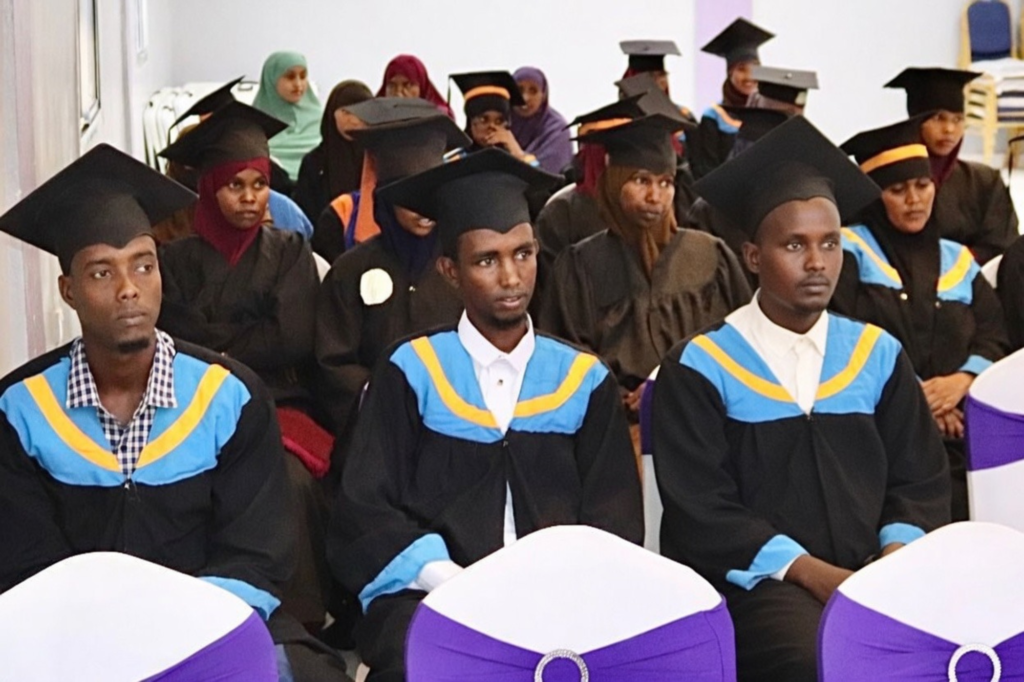
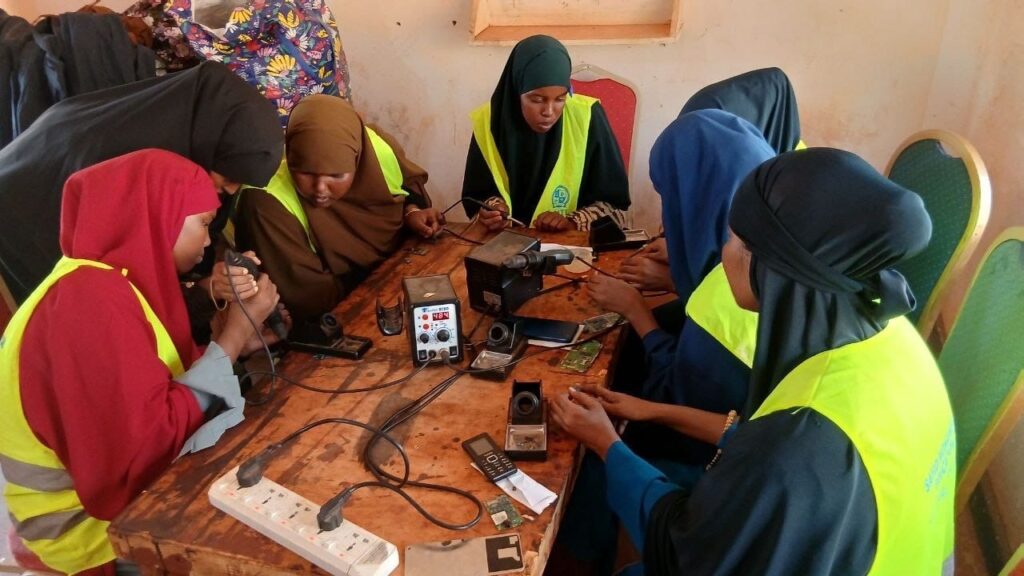
Supported trades include beauty and bridal care, tailoring and fashion design, electrical wiring, plumbing, welding, solar installation, mechanics, ICT and media, food and hospitality services, carpentry, and agriculture. These courses were not selected as standalone training activities. They were selected because they connect young people to services that households, businesses and communities already need.


“Before the training, I only saw beauty work as something other people were doing across the border. Now I can serve clients here at home and earn from my own skills.”
Maryan Mohamed Abdi, Beauty and Bridal Care graduate, Dollow
In Dollow, bridal beauty and henna services offer a clear example. Many women seeking these services previously crossed into Dollo Ado, Ethiopia. This movement reflected a local service gap where demand existed, but supply was weak. For graduates trained in beauty and bridal care, that gap is now becoming a market opportunity. Instead of clients moving elsewhere, young women are beginning to provide these services locally.
This is where BORESHA-NABAD’s TVET approach extends beyond training. It begins to support a local service economy.
The programme’s role is catalytic. Its interventions are designed to reduce barriers, expand access to market-relevant skills, and help young people enter trades where there is visible demand. Over time, the longer-term value will be seen when graduates attract customers, reinvest in tools, grow their client base, and inspire others to enter similar trades.

“The certificate gave me confidence, but the real value is that I can now use my hands to earn. People need these services, and we are now able to provide them.”
Mohamed Suleiman, TVET graduate, Dollow
For young people trained in electrical wiring, plumbing, tailoring, mechanics and solar installation, the opportunity is similar. Borderland towns need skilled service providers. Households need repairs. Small businesses need installation and maintenance. Women need tailoring and beauty services. Farmers and traders need practical technical support. When local youth are equipped to meet this demand, skills begin to circulate inside the local economy.
This also matters for women’s economic inclusion. In many borderland settings, women face additional barriers to income generation, including limited access to training, finance, tools, networks and safe market entry points. By supporting women into trades such as tailoring, beauty care, hospitality and other service areas, the programme is helping widen their participation in the local economy.
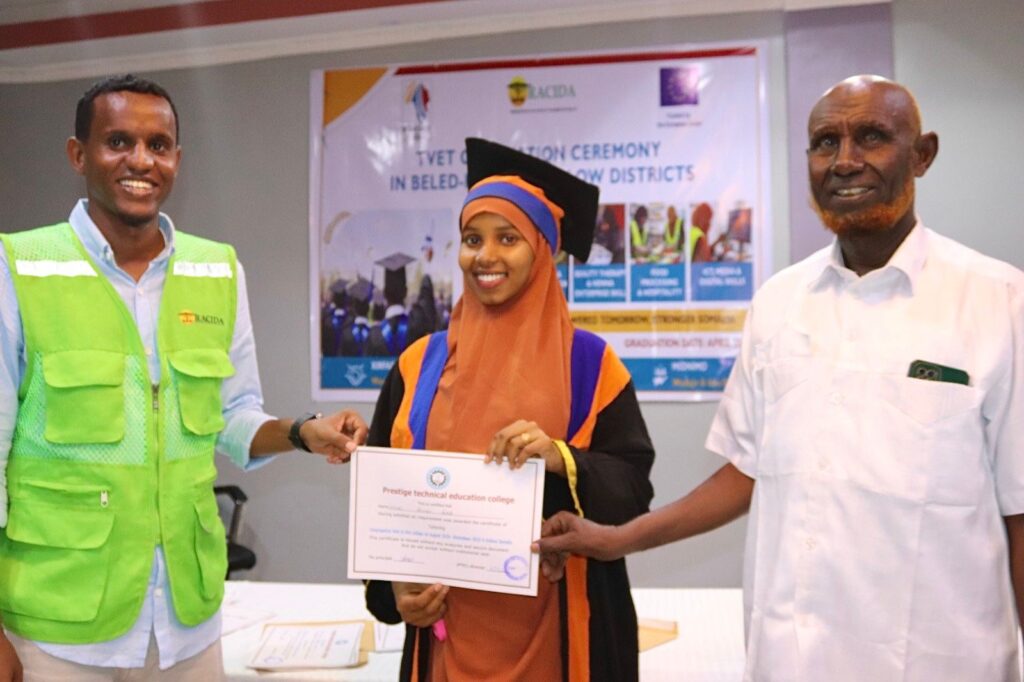
“I want to build my own customer base. Even if I start small, I now have something that can grow.”
Habibo Hassan, TVET graduate, Beled-Hawa
The early signs are encouraging. Graduates are moving from classroom learning into service provision. Some are already testing self-employment, while others are exploring work with existing businesses. These are early signals, not final proof of long-term change. The stronger test will be whether graduates continue earning, whether local customers trust and use their services, whether training institutions keep aligning courses with demand, and whether other young people copy the pathway.
This is how income generation becomes more grounded, from giving young people one-off support to enabling them to help them enter local markets with skills that solve real problems.
In BORESHA-NABAD’s borderland approach, TVET is therefore a bridge between youth potential and local demand. It reduces the gap between what communities need and what young people are able to offer. It helps keep services closer to home. It supports women and youth to move from waiting for opportunities to creating them.
The work is still growing, and the most important results will emerge over time. But one shift is already visible, especially as young people begin to move from training to trade.
And when local skills begin to meet local demand, income generation becomes more than a project output. It becomes part of how the local economy starts to work better for its own people.