The BORESHA-NABAD programme
Creating resilient and self-reliant communities in the Horn of Africa
Theory of change
If01
Communities have a voice
Communities have effective channels to voice their concerns and priorities to duty bearers and security service providers (including border authorities).
If02
Institutions serve everyone
Local and regional institutions represent and serve the interests of women, youth and minority and marginalised groups, and have the capacity to anticipate shocks and manage disputes peacefully and respectfully between communities and across borders.
If03
Cross-border realities shape decisions
The cross-border nature of socio-economic interactions and natural resource management is properly understood and stakeholders across the region (including women and youth) are included in consultation and decision-making processes around policy and practice.
If04
Livelihoods adapt to a changing climate
Natural resource management practices and livelihood opportunities are diversified and adapted to changing climate.
Then
The overall resilience and social cohesion of communities living in the Triangle will improve.
Overall objective
Stakeholders in the Mandera Triangle are empowered to enable peaceful coexistence and sustainable, climate-resilient livelihoods.
Pursued through four outcome areas
Our target stakeholders
The BORESHA NABAD programme collaborates with various stakeholders in the borderlands of the Mandera, Gedo, and Liben Regions. Our partners include local and national government authorities, community leaders, young people, women, youth groups, women’s associations, and local communities. We also engage with the private sector, local business leaders, and educational institutions to ensure a comprehensive and inclusive approach to regional stability and resilience.
Our integrated systems approach
Connecting peace, markets, climate and border governance

How we work
Strengthening the relationships between systems
Climate variability, water insecurity, land degradation, market constraints, conflict, migration pressure and gaps in services feed into one another.
Together they shape who is vulnerable, which livelihoods are possible, and how well communities and institutions can anticipate, absorb and adapt to shocks. BORESHA-NABAD therefore looks at how these challenges interact within the wider system, rather than treating each as a separate issue.
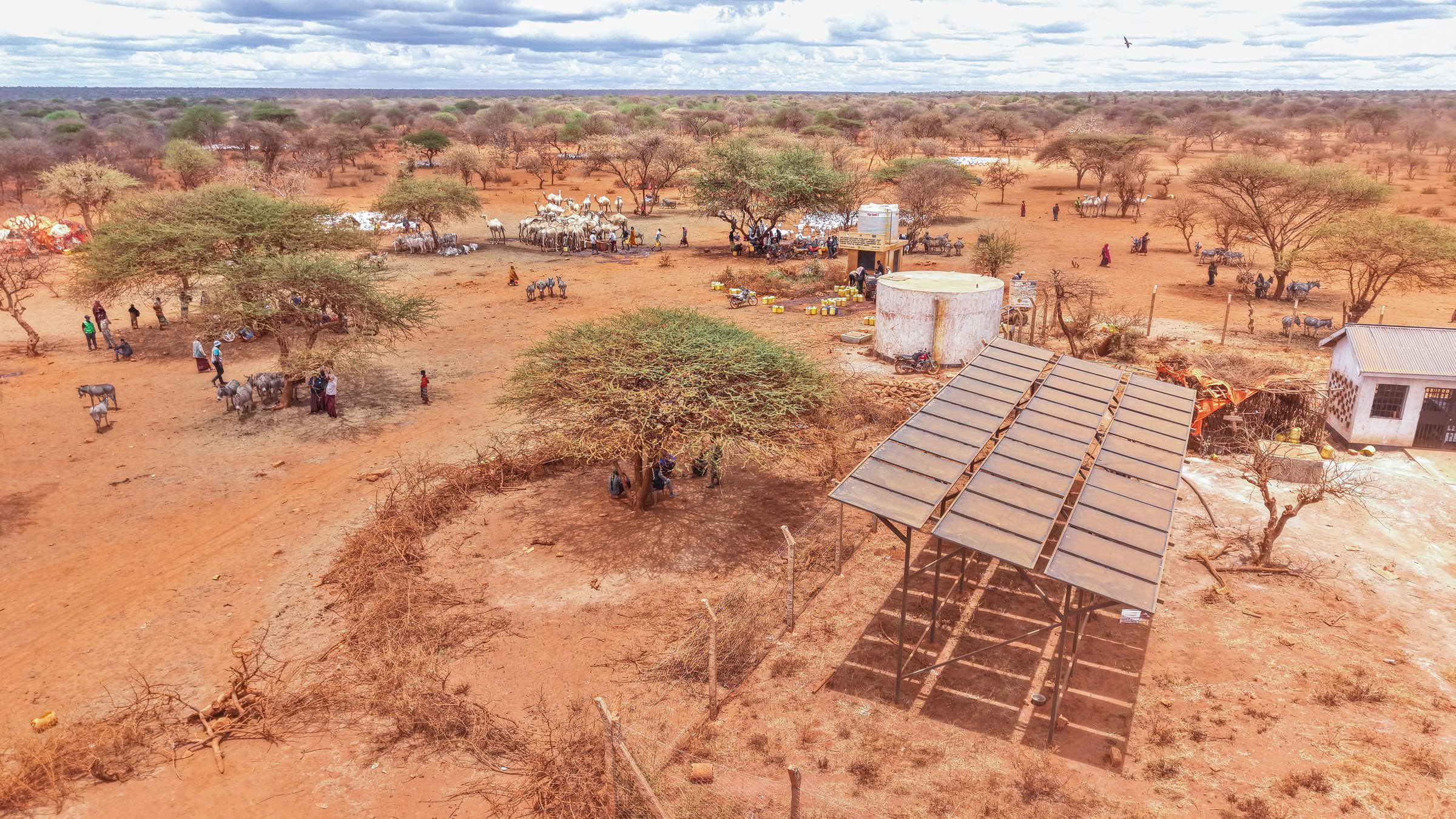
The programme works to improve the inclusivity, functioning and coordination of the institutions, markets and resource management systems that underpin livelihoods and social cohesion. Investments in peacebuilding, border governance and migration management, water systems, climate-smart agriculture, animal health, financial inclusion, enterprise development, disaster risk reduction and natural resource management are brought together so that each supports the others.
Results as of November 2026
BORESHA-NABAD in Numbers
400,000+
People targeted
Across implementation in the borderlands of Kenya, Somalia and Ethiopia.
236,019
People reached directly
123,158 women and 112,861 men.
22,611
Disaster risk reduction and conflict prevention
People reached under Focus Area One.
5,437
Cross-border coordination and authority linkages
People reached under Focus Area Two.
6,518
Income generation for women and youth
People reached under Focus Area Three.
201,365
Climate adaptation and natural resource management
People reached under Focus Area Four.
Programme data as of November 2026.


