
By Abdulaziz Hassan | BORESHA Project
Shangala community in Mandera North, Kenya faces acute water shortage challenges during the dry season. Distance to water sources involves long treks that exceeds 14km, this is not only risky but also time consuming. Fetching water for livestock and domestic use is an uphill task to the community. Other methods of getting this precious commodity like water trucking is very expensive and unsustainable. World Vision implements Disaster Risk Reduction (DRR) component of the BORESHA project to mitigate some of these challenges.
To mitigate the effects of future disasters, World Vision supports the targeted communities to come up with DRR action plans for the common disasters in the region so as to mitigate the effects of these disasters in the event that they happen. The action plans with key intervention measures were developed and the DRR committees kept copies of the action plans for implementation of what was within communities’ capacity to lobby for external support.
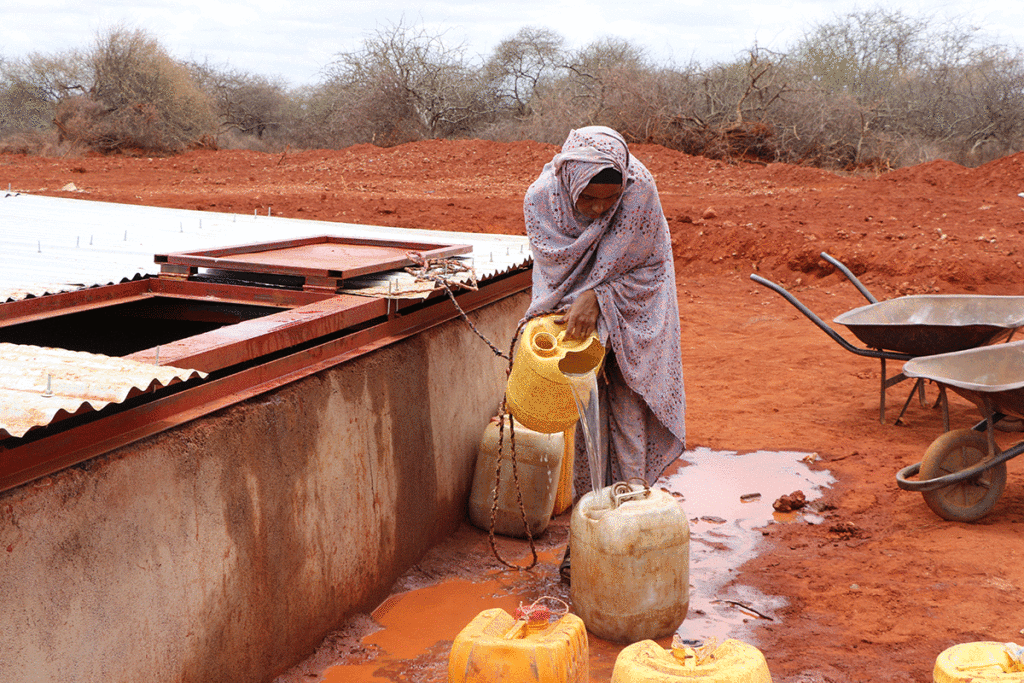
World vision supported implementation of some of these actions for the extremely poor and vulnerable communities including: a 400M3 underground water tank in Kukub location; 800M3 underground water tank in Doday location; 800M3 underground water tank in khotkhot location; 400M3 underground water tank in Quracmadow location; elevated steel tank in Hullow location; piping and construction of water kiosks for communities in Shirshir and Hullow locations; rehabilitation of 4 shallow wells in Tarama and Shantoley locations; construction of hay store in Neboi location and desilting and lining of Malkamari earth pan with heavy duty waterproof materials.
A team from World Vision Kenya visited some of the areas where the above activities were implemented. Among the areas visited was Shangala which is about 15KM south of Rhamu town, Northeastern Kenya. The location falls within pastoral livelihood zone and is one of the areas that is normally hit hard during times of droughts. It is for this reason that the community members prioritized water related interventions in their DRR action plan. The team met with Lidoy Abdullahi Farah, a mother of 7, who is also a member of the DRR committee in her community, to discuss some of the interventions. The formation of the DRR committee to handle problems stemming from common shocks and the subsequent capacity building for the committee, was an eye opener for this community. The members appreciated the facilitation of DRR action planning and the guidance given throughout the process.
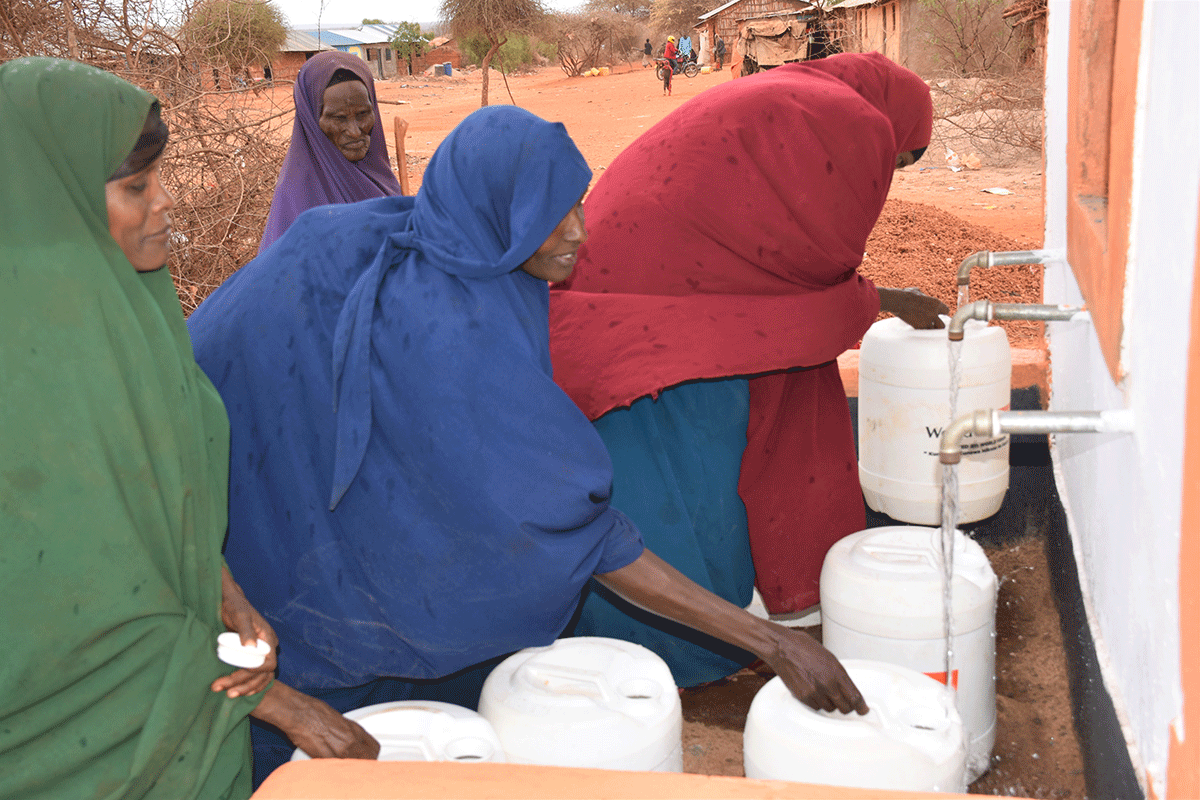
“We have learnt how to plan for effective mitigation measures and we now appreciate that when the little community owned resources are pooled together, the community can successfully address problems affecting them and this is how we were able construct a dispensary that is now at final stages. For works that need resources or expertise that is outside the capacity of the community, we seek for external support from our partners and we are really grateful for the response we got from World Vision and BORESHA,” says Lidoy. When asked about the support given by World Vision and what difference it has made in their lives, she said that the construction of underground water tank was a priority to the community. Water is a basic need and without it, life becomes very difficult.
The surface run-off water during rainy seasons used to cause problems but now they are trapped in a tank, the water will no longer be considered as a problem but a precious resource. Before construction of the tank, women used to trek many kilometers to get this very essential commodity. The nearest water point was 15KM away.
“Even after seeking for water trucking support from government and other external partners, we would not benefit from the water trucking exercises because we did not have water reservoir where the trucked water could be kept. But as you can see, we have water in the tank and people are using it. We fetch the water for household use and we are also able to water our livestock, “she explains. “Now we are less dependent on external support because we collect funds from within the community to hire a water bowser to truck water which is then kept in the underground water tank constructed for us by World Vision and BORESHA,” Lidoy adds.
A total of 220 households and approximately 250 livestock benefits from this water reservoir. “The water tank has also helped us improve the hygiene and sanitation of the beneficiaries as they are now able to clean more often. The time that used to be wasted in search of water is also being put into a better use and this is really a remarkable change. Women who were burdened with fetching water from a long distance suffered headache and other related problems but now they look healthy and energetic,” she concludes.