
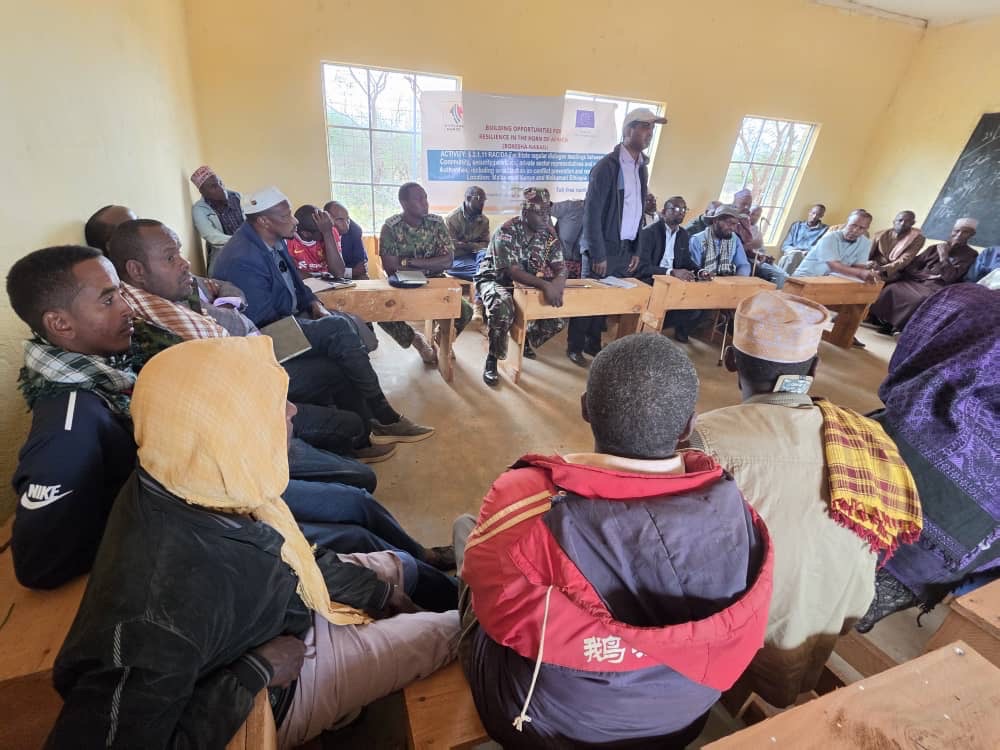
A sequence of cross-border dialogues has helped Garre and Degodia community representatives move from escalating tensions to agreed reparations, the restoration of a damaged water facility, and renewed commitments to peaceful coexistence.
A recent incident in Malkamari, on the Ethiopian side of the Kenya–Ethiopia border, threatened to strain relations between the Garre and Degodia communities.
During the incident, a young boda boda rider from the Degodia community was seriously injured and his motorcycle was forcibly taken. The tensions that followed developed into skirmishes between members of the two communities and caused damage to the Malkamari borehole, an important water facility serving the surrounding population.
Recognising the risk of further escalation and wider cross-border spillover, BORESHA-NABAD supported a sequenced peace process that brought the affected communities and responsible authorities together to address the incident and its consequences.
From de-escalation to resolution
The process began with an initial dialogue facilitated through RACIDA Kenya at the onset of the tensions. Community elders, representatives and authorities from both sides examined the immediate drivers of the conflict, addressed concerns raised by the parties and agreed on the cessation of hostilities.
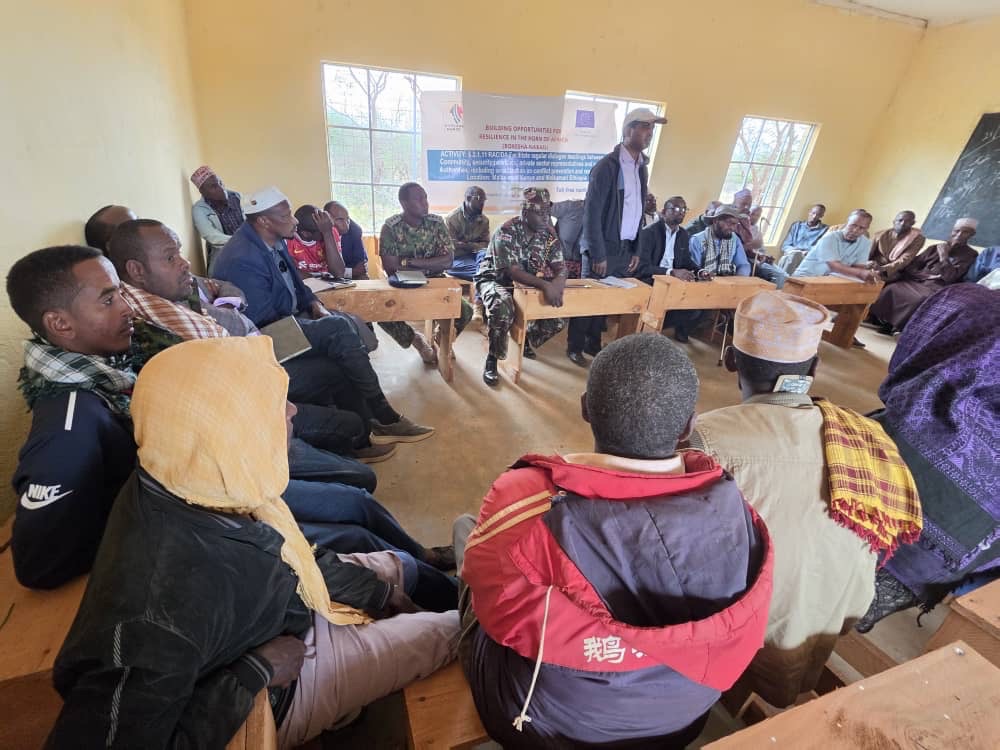
This early intervention helped contain the situation and created the conditions needed to address the underlying grievances through dialogue rather than retaliation.
Building on the first engagement, BORESHA-NABAD, through RACIDA Ethiopia, collaborated with the Mandera County Department of Community Cohesion and local authorities in Mubarak to facilitate a follow-up cross-border peace dialogue in Malkamari.
The meeting brought together elders, community representatives, conflict-monitoring committees, and administration and security actors from Mubarak in Ethiopia and Banisa in Kenya. It provided an opportunity to review progress on the earlier resolutions, conclude discussions on outstanding claims and agree on practical steps towards reconciliation.
Communities agree on practical resolutions
Across the two dialogues, the parties reached agreement on the immediate grievances arising from the incident:
✅ Reparation for the injuries sustained by the boda boda rider.
✅ Compensation of KES 120,000 for the motorcycle taken during the incident.
✅ A joint assessment of the damage caused to the Malkamari borehole and agreement on modalities for its restoration.
✅ Renewed commitments to peaceful coexistence and the early resolution of emerging disputes between the two communities.
These agreements moved the process beyond general calls for peace. They addressed the harm experienced by the affected individual, recognised the damage caused to a shared community resource and placed responsibility for maintaining peace in the hands of the communities and authorities closest to the conflict.
Local actors at the centre of peace
Community elders, conflict-monitoring committees and local authorities from both sides helped de-escalate the tensions, mediate the outstanding grievances and guide the parties towards mutually accepted resolutions.
Their participation was particularly important in connecting community-level mediation with government and security structures across the border. By working together, they helped prevent renewed hostilities while creating a shared basis for addressing future concerns before they develop into wider conflict.
The process also demonstrated the value of sustained engagement. The first dialogue focused on stopping the violence and containing further escalation. The follow-up meeting then enabled the parties to review commitments, resolve outstanding claims and translate the initial cessation of hostilities into practical agreements.
With funding from the European Union, BORESHA-NABAD is expanding the space for communities, elders and local authorities to negotiate settlements, address harm and prevent local disputes from escalating into wider cross-border conflict. Through these community-owned processes, local peace actors are helping communities across the Mandera Triangle move from tension towards accountability, reconciliation and peaceful coexistence.