Focus Area Two
Cross-border Coordination and Authority Linkages
Connecting communities, authorities and cross-border peace systems so that disputes are prevented, mediated and resolved before they spread.
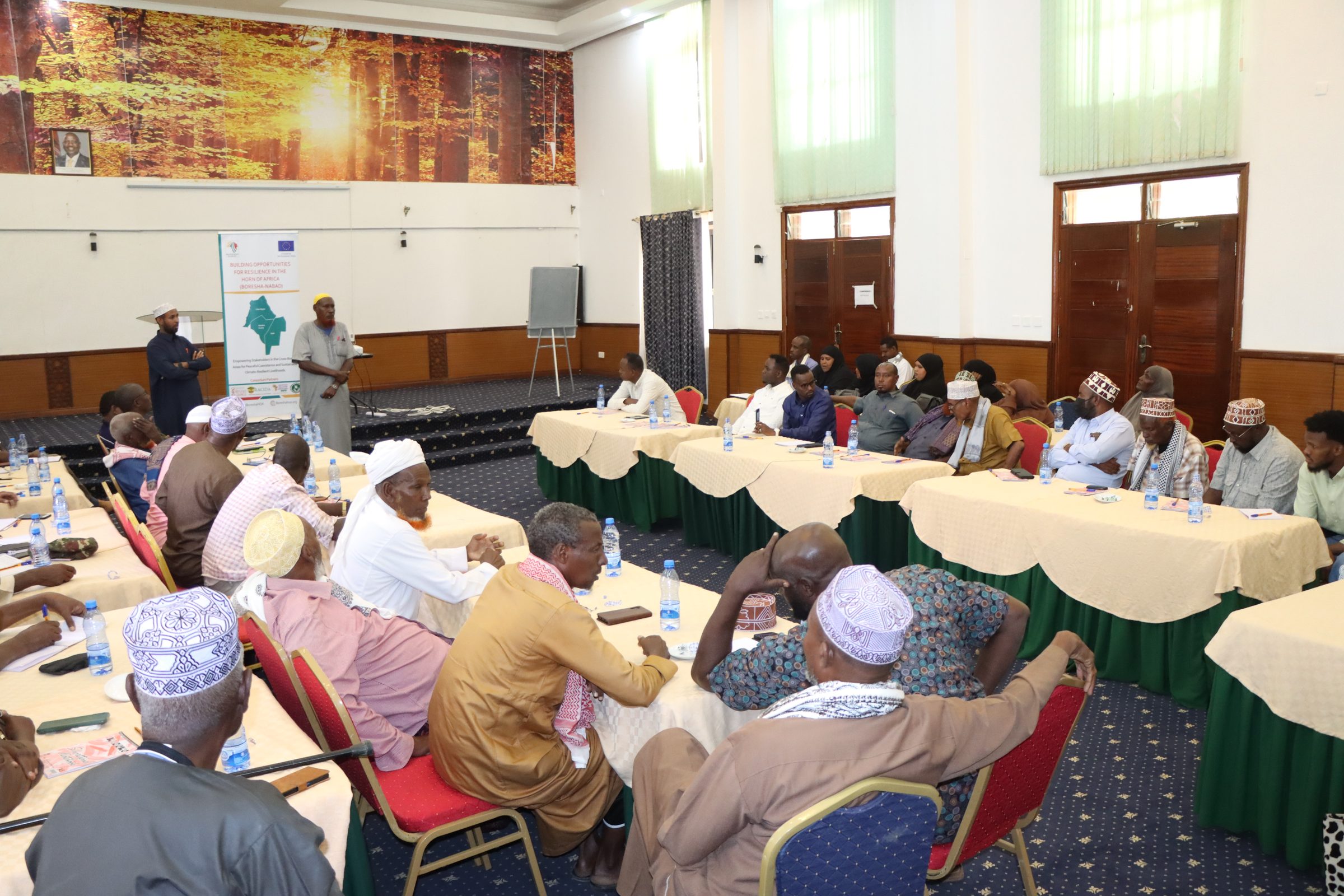
We strive to build sustainable peace by bridging gaps between various stakeholders, including the communities and authorities at local, national, and regional levels. Our initiatives focus on strengthening and building effective linkages between these critical actors to ensure that peacebuilding efforts are cohesive, inclusive, and effective. BORESHA-NABAD’s initiatives empower communities and local leaders to create sustainable solutions for lasting peace and security through an all-inclusive space that facilitates dialogue and collaboration.
We aim to
- Facilitate cross-border DRR, EWS and conflict response coordination and communication between the different stakeholders to build long-term conflict mitigation and resilience.
- Increase women and youth involvement in peacebuilding efforts.
- Support effective advocacy towards national and regional level institutions by borderland community representatives.
Why it matters
Conflict in the tri-border area rarely stands still
Key challenges
Fluid roles, uneven governance
Climate stress, livelihood pressure, shifting alliances, resource competition and wider politics all shape conflict across the Kenya, Somalia and Ethiopia borders.
Violence is rarely static here. Individuals and groups may move between roles as pastoralists, traders, mediators or combatants depending on seasonal, economic and security conditions. Informal power brokers, youth groups, militias and formal security actors add further layers, with allegiances that can shift with incentives, political influence or survival needs.
Governance also differs across the three borders. Kenya and Ethiopia have stronger formal systems, while Somalia relies more heavily on traditional mechanisms such as Alternative Dispute Resolution. Weak cross-border coordination, limited enforcement of agreements and gaps in justice systems leave peace initiatives fragile, and informal cross-border interaction continues despite formal border closures.
Our approach
Linking communities to every level of authority
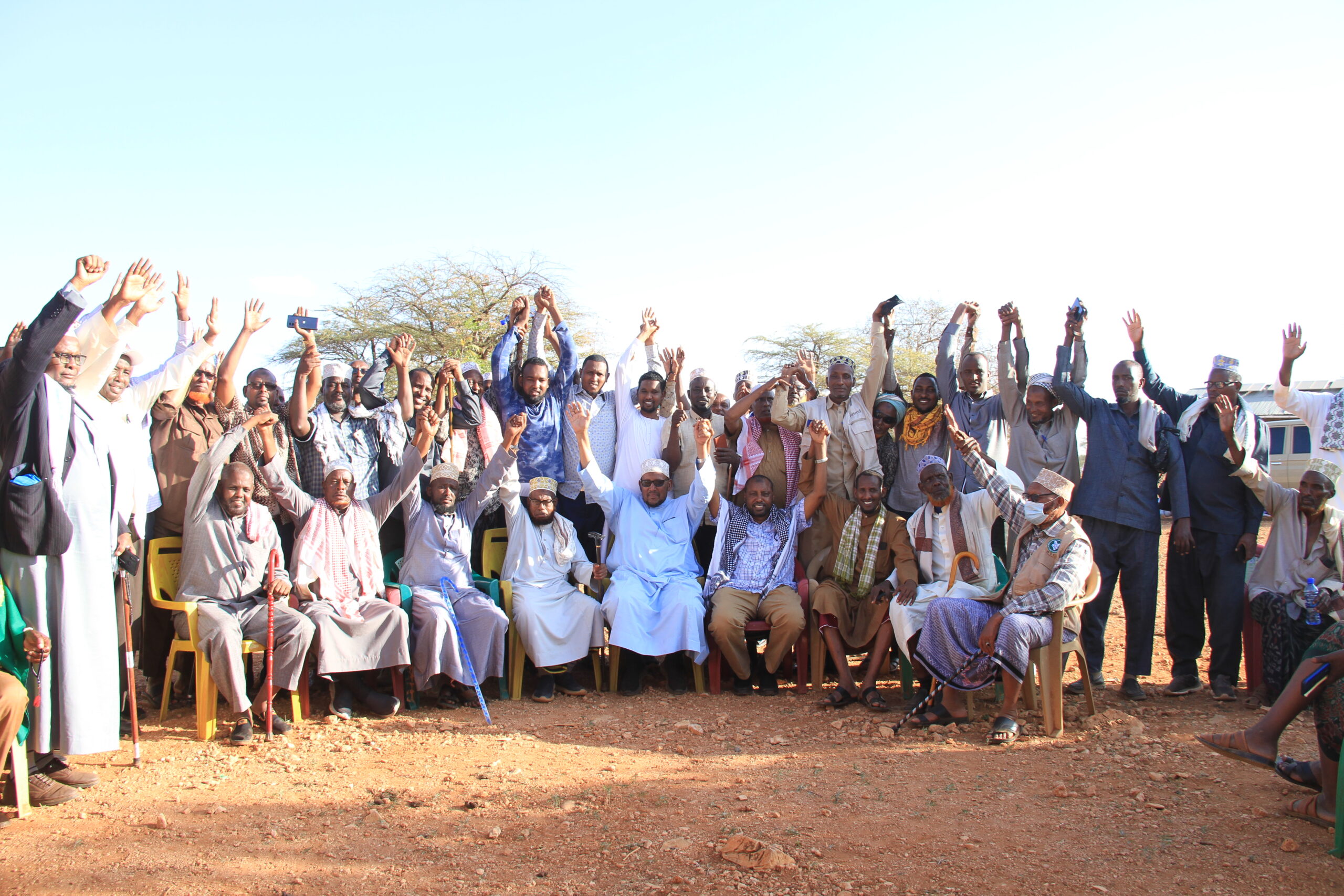
Peace holds better when communities, civil society and authorities at local, national and regional level work through the same channels.
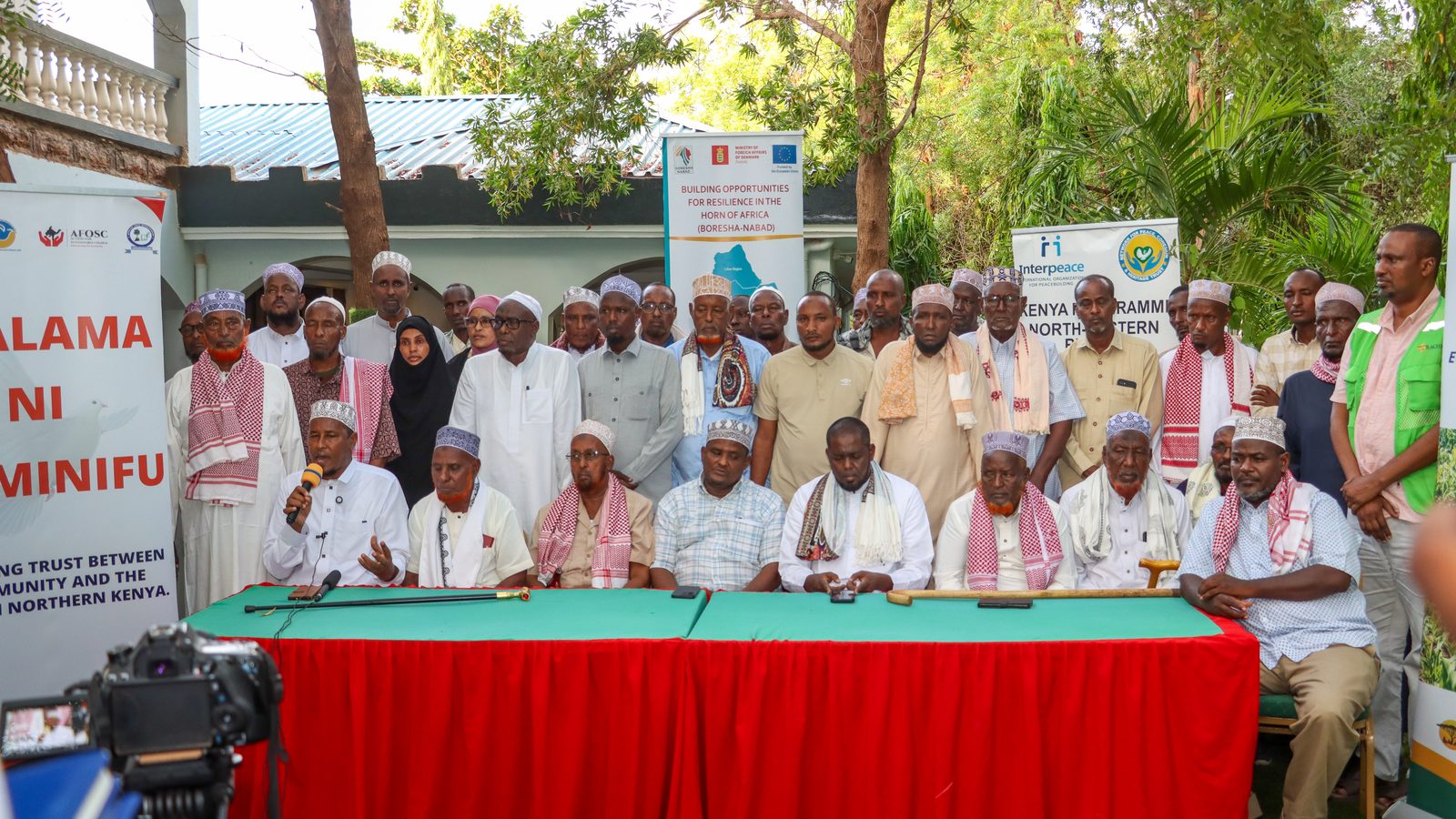
BORESHA-NABAD strengthens the linkages between communities, civil society actors, local authorities, national institutions and regional actors.
The programme facilitates continuous context analysis, supports community and government-led response mechanisms, connects disputes to justice referral pathways, and integrates livelihood resilience to ease the economic stress that feeds social tension.
BORESHA-NABAD has shifted peacebuilding in the borderlands from fragmented, reactive responses towards an inclusive, coordinated, and cross-border approach that strengthens stability, social cohesion, and resilience across shared borders.
Hussein Yussuf, Chief Officer for Community Cohesion, Mandera County
Intervention areas
Where the work is focused
Six areas of work help local and cross-border peace systems prevent, manage and resolve conflict.
01
Conflict monitoring and analysis
Communities, authorities and partners track changing conflict, security and border governance dynamics and act early on emerging risks.
02
Inclusive peace and governance mechanisms
Community-led and government-led structures for conflict prevention, dialogue, mediation and coordinated response are strengthened.
03
Justice and accountability linkages
Peacebuilding and work on violent extremism are connected to formal and informal referral pathways for cross-border disputes and conflict-related incidents.
04
Wider participation in peace systems
Women, youth, elders, religious leaders and community representatives take active roles in dialogue, mediation, advocacy and decision-making.
05
The economic drivers of conflict
Livelihood, resilience and economic inclusion work reduces competition over resources and creates shared opportunity.
06
Border governance and cross-border coordination
Institutions and stakeholders manage shared resources, mobility and friction points together, before they escalate into wider instability.
Results as of November 2026
BORESHA-NABAD in Numbers
5,437
People reached
Through peacebuilding, mediation and authority linkages.
1,058
Sensitisation participants
Reached through sensitisation on conflict prevention and resolution.
849
Mediation support
People supported with logistics for conflict mediation, enabling responses to active conflicts and tensions.
712
Peace negotiation participants
Involved in meetings that promote peace negotiations and agreements.
1,409
Women and youth advocates
Engaged through Women for Change initiatives and youth advocacy dialogues and campaigns.
15
Community action plans
Developed with 460 participants.
Programme data as of November 2026.