
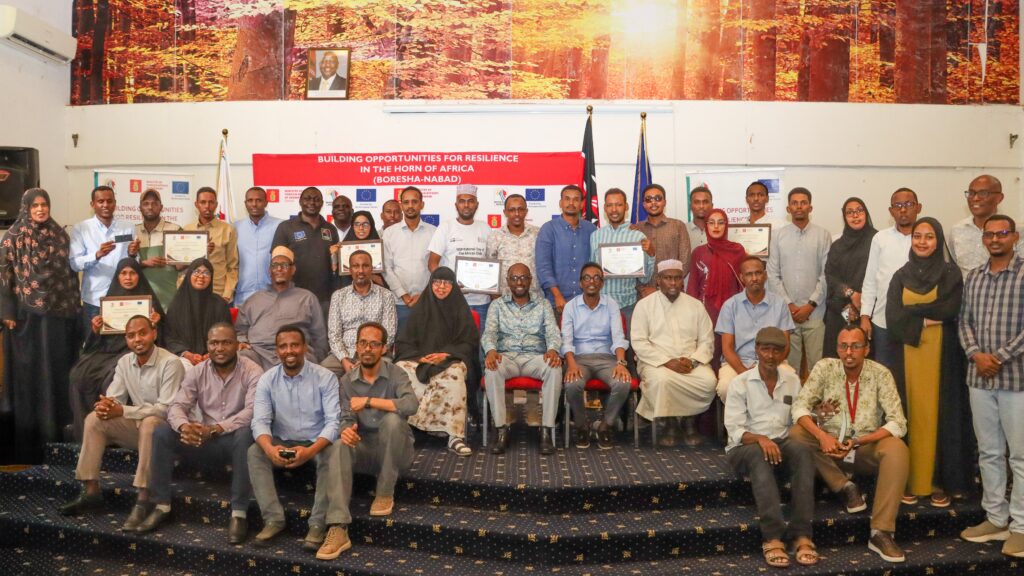
MANDERA, Kenya, 23 July 2026 – BORESHA-NABAD consortium partners from Kenya, Somalia and Ethiopia convened in Mandera from 21 to 23 July 2026 for a Strategic Review Session to assess programme progress, address implementation challenges and align priorities for the programme’s final year.
The three-day BORESHA-NABAD Strategic Review brought together the Programme Management Unit and implementing partners, including the Danish Refugee Council (DRC), RACIDA, VOPA and WFPD. Consortium teams, together with the PMU, jointly reviewed achievements across the programme’s four outcome areas and identified opportunities to strengthen coordination, improve implementation efficiencies, and sustain results across the Mandera Triangle.
As a European Union-funded programme with co-funding from the Ministry of Foreign Affairs of Denmark (Danida), BORESHA-NABAD continues to support climate-resilient livelihoods, and peaceful coexistence in the borderlands of Kenya, Somalia and Ethiopia.
Strengthening Resilience Across the Mandera Triangle
Across the Mandera Triangle, communities depend on shared grazing lands, water resources, livestock trade routes and cross-border markets. While these connections strengthen local economies and livelihoods, they also increase exposure to climate shocks, resource competition, insecurity and market disruptions.
BORESHA-NABAD addresses these challenges through an integrated resilience approach that links peacebuilding, disaster risk reduction, climate adaptation and economic development. By strengthening connections between communities, governments and markets, the programme supports sustainable solutions that improve resilience and reduce vulnerability across borders.
Prolonged droughts continue to place pressure on natural resources, while seasonal flooding disrupts transport networks, mobility and market access. The Strategic Review enabled partners to examine these evolving risks and ensure that programme interventions remain responsive to emerging needs.
Reviewing Progress and Planning for Sustainable Impact
During the Strategic Review Session, consortium partners assessed programme evidence and implementation experience from Kenya, Somalia and Ethiopia to determine where the strongest results had been achieved.
Discussions focused on:
- Resolving implementation bottlenecks;
- Accelerating delayed activities;
- Scaling successful interventions;
- Strengthening coordination among partners;
- Increasing government and community ownership; and
- Documenting lessons for future cross-border programming.
“The review gave us an opportunity to assess the programme as one interconnected investment rather than as a collection of individual activities,” said Abdi Dagane, RACIDA BORESHA-NABAD Team Lead.
Supporting Climate-Resilient Livelihoods and Peaceful Coexistence
BORESHA-NABAD recognises that communities experience climate shocks, market disruptions and resource pressures as interconnected challenges. The programme therefore promotes solutions that strengthen both livelihoods and social cohesion.
Through investments in climate-resilient livelihoods, inclusive market systems, natural resource governance, and community-government collaboration, BORESHA-NABAD supports communities in better anticipating, managing, and recovering from shocks while expanding economic opportunities.
“Communities experience climate shocks, market disruptions and resource pressures across borders. Our planning, coordination and delivery must therefore remain equally connected,” said Abdimunim Hajj, DRC Kenya Programme Manager.
Recognising Excellence in Cross-Border Programme Delivery
The Strategic Review also recognised the teams whose collective work transThe Strategic Review also celebrated the contributions of teams implementing BORESHA-NABAD activities across Kenya, Somalia and Ethiopia.
During the closing ceremony, the Programme Management Unit awarded certificates and trophies to teams from DRC Kenya, DRC Somalia, DRC Ethiopia, RACIDA, VOPA and WFPD.
Recognition included achievements in:
- Programme Reporting Quality
- MEAL and Data Quality
- Visibility Compliance
- Implementation Efficiency
- Youth and Women Inclusion
- Innovative Peacebuilding Initiatives
Awards were also presented for:
- Inclusive Systems Adoption
- Financial Management Stewardship and Compliance
- Cluster Collaboration and Cross-Border Coordination
These awards highlighted the importance of accountability, inclusion, learning and collaboration in achieving sustainable development outcomes.
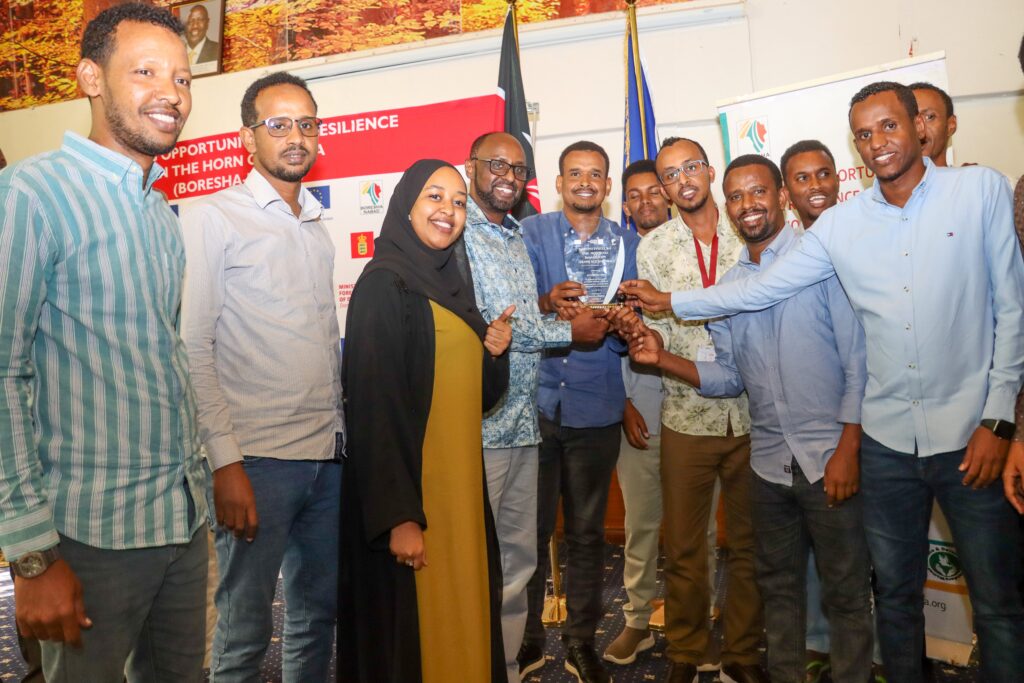

“Recognition for inclusive systems adoption affirmed the importance of embedding inclusion throughout programme design and delivery. Sustainable change depends on government institutions, communities and market actors having defined roles in shaping and carrying interventions forward, and we remain conscious of our role in facilitating this change,” said Abdimajid Mohamed, DRC Somalia Team Lead.


“VOPA is proud to have received the Innovative Peacebuilding Initiative Award. BORESHA-NABAD continues to support communities to live peacefully across the border, and this recognition by the PMU affirms the collective effort behind that progress,” said Issack Abdirahman, CEO of VOPA.
Government Leadership and Long-Term Sustainability
H.E. Dr Ali Maalim, Deputy Governor of Mandera County, attended the closing ceremony as Chief Guest and joined the Programme Management Unit in presenting the awards.
In his remarks, the Deputy Governor commended the European Union, Danida and the consortium partners for investing in market systems-focused interventions that responded to borderland realities while strengthening the foundations for lasting resilience.
“BORESHA-NABAD’s collaboration and co-investment with government and private-sector actors established an important foundation for sustainable change. Aligning programme investments with local priorities and working through existing institutions and markets strengthened the continuity of these gains beyond the programme period,” said H.E. Dr Ali Maalim.
His message emphasised the government’s role beyond supporting the delivery of activities. Government leadership remained central to integrating effective approaches into local planning, coordination and service delivery. Similarly, co-investment with private-sector actors strengthened commercially viable relationships through which essential services and market opportunities continued to reach underserved communities.
BORESHA-NABAD Final Year Focus
As BORESHA-NABAD enters its final year, consortium partners remain committed to consolidating achievements, strengthening local ownership and documenting lessons from one of the region’s leading cross-border resilience programmes.
The Strategic Review concluded with renewed commitment to sustaining peace, strengthening climate resilience, improving livelihoods and supporting inclusive development across the Mandera Triangle.